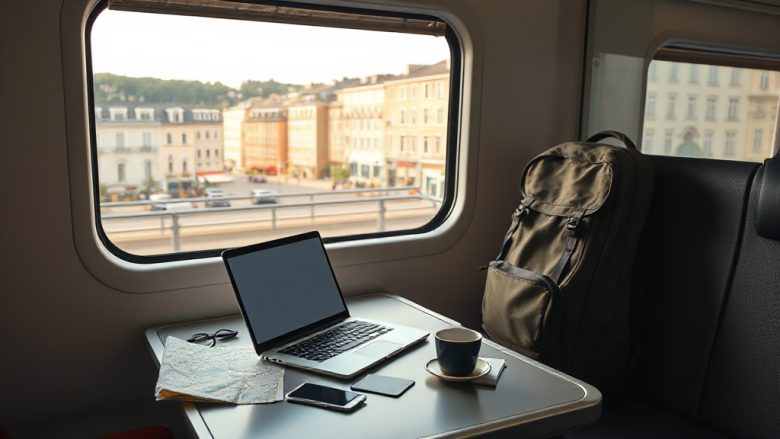
Picture a solo traveller planning a trip for next spring. Last year, the process meant comparing hostel dorms, scanning reviews for mentions of lockers, and guessing whether a city would feel lonely after dark. This time, the options look different. There are women-only departures with fixed dates, hostels advertising proper desks and quiet hours, planning tools that build an itinerary around a budget and a mood, and accommodation listings that spell out exactly what safety looks like on site. Some of it is genuine progress. Some of it is marketing dressed up as a movement.
That gap between real change and hype is what this piece is for. Below are the solo travel trends to watch in 2026 that will actually shape how trips get planned, booked and experienced, plus a closing note on what to ignore. If you travel alone, or you’re considering it for the first time, these are the shifts worth paying attention to before you commit money to anything.
Slower trips replace the checklist sprint
The biggest change isn’t a destination. It’s pace. Solo travellers are increasingly booking fewer stops and staying longer in each one, often a week or more in a single base. A trip that once covered five cities in ten days now covers two, with day trips radiating outward instead of a suitcase repacked every second morning.
There’s a practical reason behind it. Moving constantly is exhausting when you’re the only person carrying the logistics, and the cost of constant transit adds up fast. Slower trips also solve a quieter problem: loneliness tends to hit hardest in the first 48 hours in a new place, and staying put long enough to recognise a barista or a shopkeeper takes the edge off it.
What this looks like in practice: longer accommodation bookings, more interest in neighbourhoods rather than landmarks, and a willingness to spend an afternoon doing very little. Hostels and guesthouses are responding with weekly rates and long-stay rooms, and some are building social calendars around people who’ll be around for a while rather than one-night guests.
Work-friendly hostels and the blurring of work and travel
Remote work has quietly reshaped what solo travellers expect from budget accommodation. The old hostel trade-off was cheap beds and no privacy. The newer version is a private pod or single room, reliable wifi, a real desk, and a co-working area that doesn’t double as the breakfast room at 9am.
This matters because a growing share of solo trips are partly working trips. Someone takes two weeks off, works three mornings, and travels the rest. That hybrid shape needs infrastructure: decent upload speeds for calls, somewhere to take a video meeting without background noise, and lockers big enough for a laptop. Hostels that have invested in this are filling beds in shoulder season, when the pure holiday crowd has gone home.
The flip side is that not every listing labelled work-friendly lives up to it. A single shared table and a wifi password do not make a co-working space. Read recent reviews specifically for mentions of call quality and quiet areas, and treat any hostel that can’t describe its desk setup in detail as a gamble.
Women-only group departures and safer group formats
Group travel has traditionally been the opposite of solo travel, but the line is blurring. More solo travellers, particularly women, are booking short group departures as a way to handle the risky or awkward segments of a trip without giving up independence for the whole journey.
The format is usually something like this: you travel alone to a starting city, join a small group for four to eight days on a specific route, then continue solo or fly home. Women-only departures have grown because they remove a specific set of frictions, from unwanted attention on night buses to the simple relief of sharing a taxi after dark with people you’ve just met.
It’s worth being clear-eyed about what these trips are. They’re not a guarantee of safety, and they’re not therapy. They’re a logistics solution with a social side effect. The good ones have small group sizes, female guides who actually live in the region, and free time built into the schedule rather than every hour accounted for. If a departure promises nonstop activities from dawn to midnight, it’s probably not built for people who value travelling alone in the first place.
AI planning tools and the new research routine
Planning tools have changed the early stage of a solo trip more than any other part of the process. Instead of opening fifteen browser tabs, travellers are describing what they want in plain language and getting a draft itinerary back in seconds, then editing it hard.
The useful version of this is unglamorous. It’s asking for a rough route that fits a set number of days, a budget ceiling, and a preference for trains over flights. It’s generating a packing list for a specific climate. It’s translating a menu or a train announcement in the moment. The output is a starting point, not a plan.
Where these tools fall down is anything that requires current, local knowledge. Opening hours change, restaurants close, a street gets dug up for six months. Anything time-sensitive or safety-related still needs a human check, ideally from someone who’s been there recently. Treat generated itineraries the way you’d treat advice from a confident stranger: useful, plausible, and worth verifying before you build a day around it.
Safety transparency becomes a booking filter
Solo travellers have always cared about safety, but the way they assess it is getting more specific. Vague reassurances like “safe area” and “friendly staff” are losing value. What people want now is concrete detail: Is there a locked gate? Is reception staffed overnight? Are there female-only dorms, and are they actually enforced? How far is the nearest well-lit transport stop?
Accommodation providers are starting to answer these questions up front, partly because guests keep asking and partly because reviews punish ambiguity. Some listings now include floor plans, photos of the entrance, and notes on late-arrival procedures. That level of detail is becoming a filter: if a property can’t answer basic safety questions in its listing, solo travellers increasingly scroll past it.
The same shift is happening in how people research destinations. Rather than relying on a single overall safety score, travellers are looking for time-of-day specifics, transport details, and first-hand accounts from people who match their own profile. A city that’s fine for a confident daytime walker can feel very different at 11pm on a quiet street, and the better sources now say so.
One caution: transparency can be performed. A listing that mentions safety ten times isn’t necessarily safer than one that mentions it once with specifics. Look for facts, not adjectives.
What to ignore in 2026
Not everything marketed at solo travellers deserves your attention. Anything that treats travelling alone as a personality trait rather than a logistics question is usually selling something. So are itineraries that promise transformation in five days, and “hidden gem” lists that have clearly been assembled without anyone visiting.
Be sceptical of tools that claim to remove all uncertainty from a trip. Some uncertainty is the point. The wrong turn that leads to a better lunch, the plan that collapses and gets replaced by something unexpected, the afternoon you spend talking to a stranger because nothing else was scheduled. A trip that’s fully optimised in advance has less room for any of that.
The trends worth acting on are the boring ones. Slower routes, accommodation that answers real questions, group formats that solve a specific problem, planning tools used as a first draft, and safety information specific enough to be useful. Everything else can wait until it proves itself. If you’re planning a solo trip for next year, start with those five and ignore the noise around them.
Frequently asked questions about solo travel in 2026
Is solo travel getting more expensive?
In some ways, yes. Slower trips and private rooms cost more per night than dorm beds, and many solo travellers are choosing comfort over the cheapest option. But staying longer in one place often offsets this through weekly rates, fewer transit costs, and less impulse spending from constant movement. The overall budget depends more on pace than on destination.
Are group departures still considered solo travel?
Most people who book them think so. The appeal is handling a specific segment, often a remote route or a first few days in an unfamiliar region, without committing to a fully guided trip. You still arrive alone, make your own decisions outside the group dates, and leave when you want. It’s a tool, not a category.
Can I trust an AI-generated itinerary?
For structure and rough logistics, yes. For anything current, no. Use it to draft a route or a packing list, then verify opening hours, transport schedules and local conditions through recent first-hand sources. The tool is fast at patterns and bad at things that changed last month.
What safety information should I actually look for?
Specifics rather than assurances. Whether reception is staffed overnight, whether dorm access is controlled, how far the nearest transport is and how it’s lit, and what the late-arrival procedure involves. If a listing can’t describe these in concrete terms, that tells you something useful too.