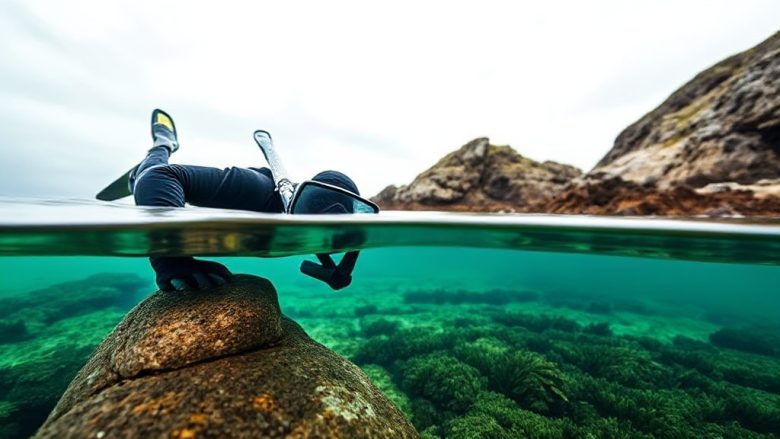
Most people assume you need a passport and a long-haul flight to see anything underwater. Then they stand on a Cornish headland in July, look down, and realise the seabed is right there — kelp, crabs, shoals of pollack, all visible without a mask fogging up in cold air. The UK does have snorkelling worth packing for. It just isn’t evenly distributed, and it isn’t a year-round hobby.
This is a shortlist of the best places for snorkelling in the UK, chosen because they reliably deliver on four things: visibility, wildlife, easy access from shore, and a season that actually works around family schedules. None of it is tropical. All of it is genuinely worth a day out.
Best Places for Snorkelling in the UK, Spot by Spot
Porthkerris, Cornwall
Quick facts: Sheltered cove on the Lizard peninsula. Best from June to September. Entry straight off the beach or slipway. Expect 4–8 metres of visibility on a calm, settled day.
Cornwall is the obvious starting point, and Porthkerris is the most forgiving of its snorkelling beaches. The bay faces east, which means it dodges the worst of the Atlantic swell that turns so many Cornish coves into a washing machine. The seabed slopes away gently, so beginners can stay in waist-deep water and still see plenty: wrasse, blennies, spider crabs picking over rock, and if you’re lucky, a cuttlefish hovering like it’s been left behind by mistake.
The real draw is the kelp forest just beyond the low-tide line. It looks dark and uninviting from the surface. Drop your face in and it’s a different world — dappled light, fish hanging in the fronds, occasional seals checking you out from a distance. Go on a neap tide with light offshore wind and you’ll get the clearest water of the year.
Lundy Island, Devon
Quick facts: Boat access only, roughly two hours from Ilfracombe or Bideford. Best July to September. Strong currents in places, so stick to the sheltered landing side. Visibility can hit 10 metres on a good day.
Lundy sits where the Bristol Channel meets the Atlantic, and the mix of cold, nutrient-rich water and granite reef makes it one of the richest marine environments in England. The island’s first Marine Conservation Zone was designated for good reason. Snorkellers working the shallower gullies near the landing beach regularly see ballan wrasse, edible crabs, and the occasional basking shark cruising past in late summer.
This isn’t a paddle-around-and-hope spot. You need to plan around the boat timetable and the tide, and the water is cold enough that a proper wetsuit isn’t optional. But for a family willing to make a day of it, the combination of a boat crossing, a picnic, and clear water is hard to beat. Book the ferry well in advance; summer sailings sell out weeks ahead.
Farne Islands, Northumberland
Quick facts: Boat from Seahouses. Best May to early July for puffins, July to September for seals. Visibility variable, often 3–6 metres. Strong tidal movement, so go with a guided boat.
This is the UK snorkelling experience people don’t expect. The Farnes are a cluster of rocky islands off the Northumberland coast, and in early summer they host one of the largest seabird colonies in England. Snorkelling here means floating above kelp while puffins whirr overhead and seals — genuinely curious, sometimes pushy — circle at a respectful distance.
It’s not a casual dip. The currents between the islands are serious, the water is cold even in August, and the best sites are only reachable by boat. Several operators run snorkel trips from Seahouses, and going with one is the sensible choice rather than trying to figure out the tides yourself. The payoff is wildlife density you won’t find anywhere else in England.
Isle of Arran, Scotland
Quick facts: Shore access at several bays including Lochranza and Whiting Bay. Best June to September. Visibility 5–10 metres on calm days. Cold water year-round — 5mm wetsuit minimum, hood and gloves recommended.
Arran gets overlooked because people assume Scottish water is always murky. It isn’t. The Firth of Clyde is sheltered, and on a settled summer week the bays around the island turn remarkably clear. The north end near Lochranza has rocky reef close to shore, with conger eels, dogfish, and dense beds of kelp. Whiting Bay on the south side is sandier and easier for children to explore.
The island is also a realistic family base — you can snorkel in the morning, walk in the afternoon, and be back at a self-catering cottage by dinner. The main constraint is weather. A week of westerly wind will churn everything up, so build flexibility into your plans and check conditions daily rather than committing to one spot.
Skomer Marine Nature Reserve, Pembrokeshire
Quick facts: Access by boat from Martin’s Haven. Best June to September. Sheltered coves around the island. Visibility often 5–8 metres. Strong tidal streams — guided trips strongly advised.
Skomer is best known for its puffins, but the water around it is the real prize for snorkellers. The reserve protects a huge range of habitats, from rocky reef to seagrass, and the sheltered northern coves are calm enough for confident beginners. Expect to see lobster, crawfish, and dense shoals of small fish in the kelp.
Because it’s a nature reserve, there are restrictions on where you can go and what you can do. That’s a good thing — it means the marine life is genuinely abundant rather than picked over. Day trips run from Martin’s Haven, and the crossing is short. If you’re combining a wildlife day with a snorkel, this is the most rewarding option in Wales.
St Abbs, Scottish Borders
Quick facts: Shore entry from the harbour. Best May to September. Visibility can reach 10 metres in settled conditions. Cold water — full wetsuit essential.
St Abbs is a working fishing village with a volcanic reef just offshore, and it’s arguably the most reliable shore snorkelling in mainland Scotland. The water is cold but clear, the entry is straightforward, and the reef is shallow enough to explore without a boat. Expect wolf fish in crevices, ballan wrasse, and walls of plumose anemones that look almost artificial in their colour.
It’s a popular spot with divers, which tells you something about the quality. The village has a small visitor centre and a café, so non-snorkelling family members have somewhere to wait that isn’t a car park. Go early in the day to avoid the worst of the boat traffic.
What to Check Before You Go
UK snorkelling lives and dies on conditions, and the two variables that matter most are wind and tide. A spot that’s perfect on a light northerly can be unfishable on a strong south-westerly, so check the forecast for the specific bay rather than the nearest town. Tide tables matter too: slack water around low tide is usually clearest, and you want to avoid spring tides when the current picks up.
Water temperature is the other thing people underestimate. Even in August, most UK coastal water sits between 14°C and 17°C, which is cold enough to sap your energy quickly without proper insulation. A 5mm wetsuit with a hood, boots, and gloves will keep you comfortable for an hour or more; a shortie won’t. If you’re hiring gear, book ahead in peak season — small coastal shops run out fast in July and August.
Finally, think about access and parking. Several of the best spots sit at the end of narrow lanes with limited spaces, and arriving at 11am on a sunny Saturday is a recipe for turning around and going home. Get there early, check whether the beach has facilities, and have a backup plan within half an hour’s drive. The UK’s clearest water is rarely more than a few metres from a car park — but it is very often a long way from the nearest toilet.