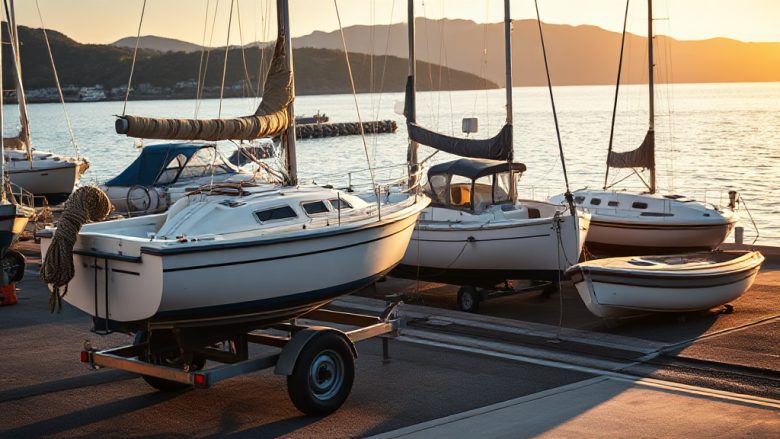
You’ve got three browser tabs open, all showing boats for sale, and they might as well be in three different languages. A tidy 22-foot trailer-sailer with an outboard. A tired-looking 30-foot cruiser with a diesel inboard. A cheap dinghy that comes with a road trailer and a box of spare shackles. All three are called “a great starter boat” by their owners, and all three would give you a completely different first season on the water.
Learning how to choose your first sailing boat is mostly about narrowing the field before you look at a single advert. The boat that suits you isn’t the one with the best photos or the lowest price. It’s the one that matches how you’ll actually sail, where you’ll keep it, who’s coming with you, and what you can genuinely afford to maintain. Get those four things straight and the listings get a lot shorter.
Start With the Sailing You’ll Really Do
Most first boats are bought for the sailing someone imagines, not the sailing they end up doing. Be honest about the realistic version. If your free time comes in half-days, a small boat you can launch and rig in under an hour will get used far more than a heavier cruiser that needs a full day just to reach open water. If your goal is a week away with the family, the opposite is true.
Ask yourself a few blunt questions. Do you want to race, or just potter? Do you sail on a sheltered estuary, a large lake, or open coast with real swell? Will you sail mostly single-handed or with crew? How far do you want to go in a single trip? The answers point strongly toward one boat type and away from the others, and that’s exactly what you want at this stage.
It also helps to think about how you’ll get on and off the water. Slipway launching, marina berths, swinging moorings and dry storage each suit different boats. A boat that’s awkward to launch will sit unused. A boat that needs an expensive berth you can’t really afford will do the same.
Trailer-Sailers: The Flexible All-Rounder
A trailer-sailer is a keel or centreboard boat light enough to tow behind a family car, typically somewhere between 18 and 26 feet. You can keep it at home, launch it where you fancy, and explore different cruising grounds without paying for a permanent mooring. For many first-time owners, that flexibility is the whole appeal.
The pros are practical. Storage is cheap or free, maintenance happens in your driveway, and you can follow good weather rather than being tied to one stretch of coast. You can also take it on holiday, which turns a modest boat into a surprisingly capable cruising platform.
The cons are equally real. Towing and launching take time and a bit of nerve, especially on a busy slipway. You’ll need a suitable car, a trailer in good condition, and somewhere to park the whole outfit. Trailer-sailers also tend to be lighter and less stiff than a fixed-keel boat of similar length, so they can feel livelier in a chop.
They suit you if you have storage space, a tow-capable vehicle, and you like the idea of variety over a permanent berth. They’re a poor fit if you hate reversing trailers or want a boat that’s always ready to step aboard.
Small Cruisers: Comfort and Range, at a Cost
A small cruising yacht, roughly 26 to 34 feet, is the classic choice for people who want overnight trips, a cabin with standing headroom, and the ability to sail further from home. It’s a proper boat with a fixed keel, usually an inboard engine, and enough space for a weekend or a week aboard.
The upside is comfort and capability. You can leave a marina or mooring, sail for hours, anchor or pick up a berth, and sleep aboard without feeling like you’re camping. Heavier displacement generally means a steadier motion in waves, which matters a lot when you’re learning and when you have nervous crew aboard.
The downside is money and commitment. Berthing costs are ongoing and often the largest single expense. Inboard engines need servicing, antifouling is an annual chore, and standing rigging, sails and electronics all have a lifespan that eventually comes due. A cheap small cruiser can quietly become an expensive one.
This type suits you if you have a permanent mooring or berth lined up, a realistic maintenance budget, and crew who want to stay overnight. It’s the wrong first boat if you can’t commit to those costs, or if you’ll only sail a handful of times a year.
Dinghies: Cheap, Simple, and Brilliant for Learning
A sailing dinghy is the least glamorous option and often the smartest. It’s small, light, cheap to buy and cheap to keep, and it teaches you more about sail trim, balance and reading the wind in one season than years of motoring a bigger boat ever will. You feel every shift and every mistake, which is exactly how skills get built.
The pros are obvious. Low purchase price, minimal running costs, easy storage, and no engine to maintain. You can launch from a beach or slipway, and a capsize is an inconvenience rather than an emergency. It’s also a low-risk way to find out whether you actually enjoy sailing before spending serious money.
The cons are comfort and range. You’ll get wet, you’ll be limited by weather and daylight, and you won’t be cruising anywhere for the weekend. Dinghies also demand a degree of agility and confidence that not every adult beginner enjoys, particularly in cold water.
They suit you if you want to learn fast, keep costs low, and sail in sheltered water close to home. They’re a poor choice if your dream is overnighting with family, or if you want to stay dry and upright at all costs.
A Simple Decision Tree and Pre-Purchase Checklist
If you’re still torn, work through it in order. First, where will the boat live? If you have free storage and a tow car, a trailer-sailer is on the table. If you have a mooring or berth, a small cruiser is viable. If you have neither and no budget for one, a dinghy is the honest answer. Second, how often will you sail? Less than once a fortnight points toward something small and easy. Third, who’s coming? Solo and pairs suit dinghies and smaller trailer-sailers; families and overnight guests push you toward a cruiser. Fourth, what’s your true annual budget, including berthing, insurance, maintenance and the inevitable repairs? That number rules more boats in or out than any brochure ever will.
Once you’ve settled on a type, inspect with a checklist rather than your heart. Look at the hull for osmosis blisters, cracks and signs of impact repair. Check the deck for soft spots and water ingress around fittings. Examine the keel attachment and keel bolts, and look for rust weeping from the keel root. On the rig, inspect standing rigging for broken strands, rust and age; if it’s over ten years old, budget for replacement. Check sails for stretched leeches, UV damage and blown stitching. Run the engine from cold, watch for smoke and listen for unusual noise, and check the gearbox and shaft seal. Look at the electrical system, battery age and wiring tidiness.
Don’t skip the paperwork either. Ask for proof of ownership, a recent survey if one exists, and service records. A professional pre-purchase survey is money well spent on any boat with a cabin and an engine, and it often pays for itself by finding one or two issues you can use to negotiate. Finally, take the boat for a sail, not just a look. Some problems only show up underway, and the way a boat feels under sail will tell you more than any listing photo.
Frequently Asked Questions
What size sailing boat should a beginner buy?
There’s no single right size, but most beginners are happiest between about 18 and 28 feet. Small enough to handle, launch and afford; large enough to sail safely in sheltered and coastal waters. Bigger boats aren’t harder to sail well so much as harder to own, berth and maintain.
Should I buy a boat with an inboard engine or an outboard?
Outboards are cheaper, easier to replace and simpler to maintain, which suits trailer-sailers and smaller boats. Inboards give better weight distribution, more range and a cleaner stern, but they cost more to service and repair. For a first boat on a tight budget, an outboard is often the pragmatic choice.
How much does it cost to own a first sailing boat each year?
Running costs vary hugely by type and location. A small dinghy might cost a few hundred pounds a year, while a moored small cruiser can easily run into several thousand once berthing, insurance, antifouling, engine servicing and replacement items are counted. Work out your annual figure before you buy, not after.
Is it worth paying for a pre-purchase survey?
Yes, for any boat with a cabin, an engine or significant value. A surveyor will find issues you’d miss and give you a negotiating position. On very cheap dinghies it may not be cost-effective, but on anything you plan to keep and sail, it’s usually the best money you’ll spend.